
Why Garden Gnomes Don’t Blink: Uncovering Their Watchful Secret

Garden gnomes are famous for many things: red hats, tiny boots, frozen smiles, and the unsettling ability to look cheerful beside a bag of compost. But among the many mysteries of the gnome, one question has troubled gardeners, philosophers, and people who have stared too long at garden ornaments after midnight:
Why don’t garden gnomes blink?
The official answer, according to the International Committee for Small Decorative Yard Persons, is that garden gnomes do not blink because blinking would reveal too much.
A blink is a tiny curtain. It goes down, it comes back up, and for one brief moment the world cannot see what your eyes are doing. Humans use this moment for moisture, comfort, and pretending they have not noticed someone waving at them from across a supermarket. Gnomes, however, have no need for such weakness.
Their eyes are always open because they are always on duty.
A garden gnome is not merely decoration. That is what they want you to think. In reality, every gnome is a watchman, surveyor, mushroom accountant, snail inspector, and unofficial judge of lawn quality. If your grass is patchy, the gnome knows. If you watered the hydrangeas but ignored the rosemary, the gnome knows. If you said, “I’ll weed that tomorrow,” in 2019, the gnome absolutely knows and has logged it in a tiny ledger made from bark.
Blinking would create gaps in surveillance.
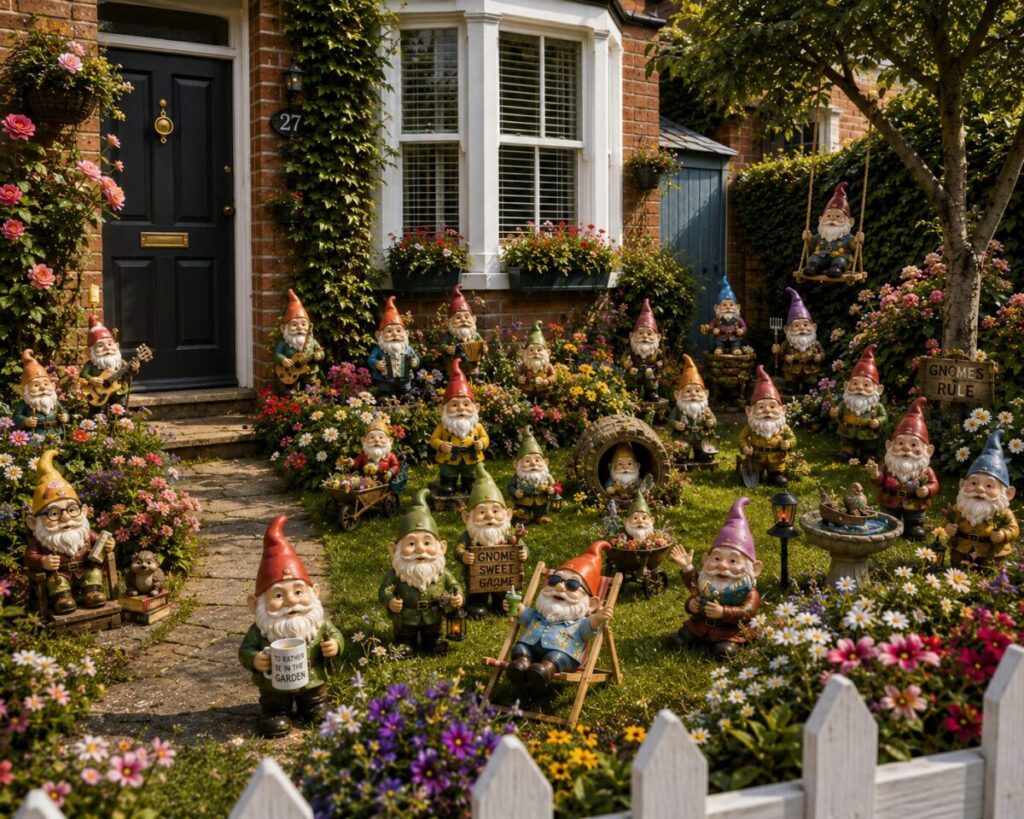
This is particularly important during the hours between 2:13 and 2:17 in the morning, when most garden-based incidents occur. Slugs hold meetings. Rakes move slightly. Bird baths whisper. Somewhere, a ceramic frog tries to become mayor. During this critical window, a single blink could allow chaos to enter through the back gate wearing a waistcoat.
Some researchers claim gnomes once did blink, long ago, in the early days of ornamental garden life. Back then, they were softer creatures. They winked at bees. They nodded at daisies. They enjoyed light conversation with watering cans. But then came the Great Courgette Incident of 1886, in which one gnome blinked at exactly the wrong moment and an entire vegetable patch became “politically complicated.”
Since then, blinking has been forbidden.
There is also the matter of trust. A gnome who blinks seems too alive. A gnome who never blinks remains just on the correct side of “probably ceramic.” This is an ancient survival strategy. If humans knew how much gnomes were noticing, we would start asking questions. Questions lead to investigations. Investigations lead to sheds being opened. And no gnome wants anyone looking too closely inside the shed.
Their fixed stare is therefore both camouflage and warning.
It says: “I am only an ornament.”
It also says: “I saw what you did with the broken plant pot.”
Scientists have attempted to study gnome blinking under controlled conditions, but the results have been disappointing. Cameras fail. Notebooks go missing. One researcher reported turning away for three seconds and returning to find every gnome in the test garden facing the opposite direction. Another attempted to place tiny eyelids on a gnome and was later found sitting in a wheelbarrow, quietly apologising to a begonias.
The Fact Goblin Department of Extremely Firm Conclusions has therefore ruled that garden gnomes do not blink for the following reasons:
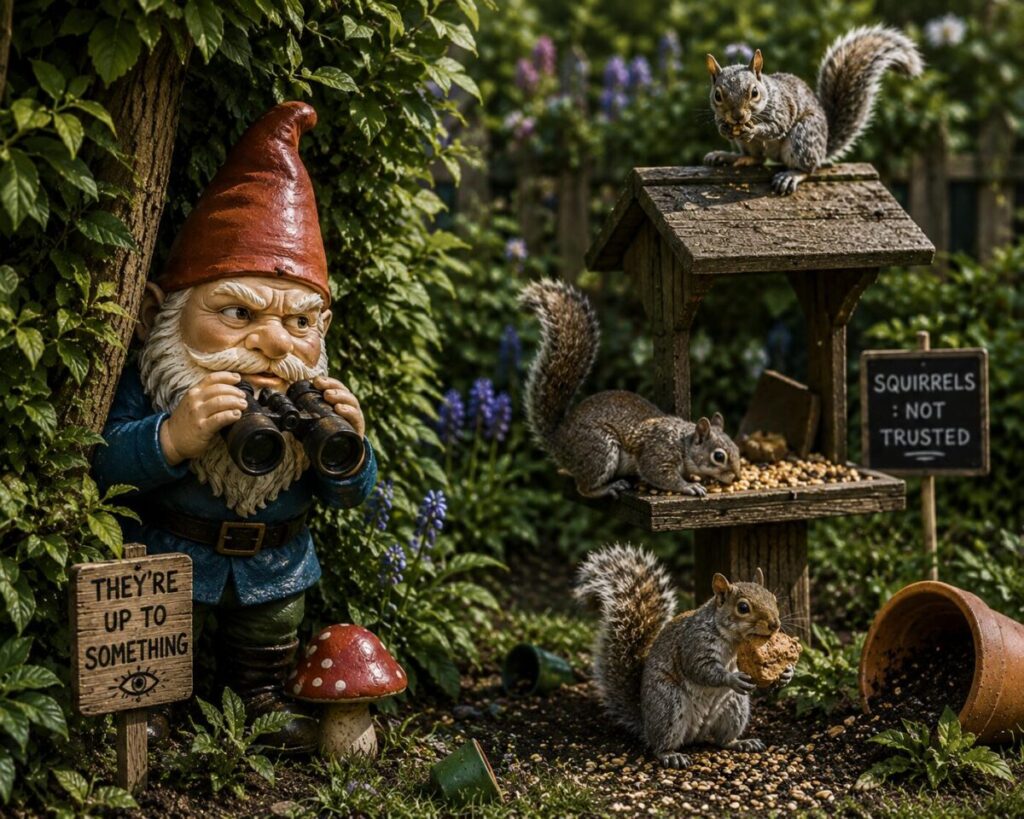
- They cannot risk missing suspicious squirrel activity.
- Their eyes are painted open by ancient agreement.
- Blinking would make them look too human, and frankly they find that embarrassing.
- They are waiting for you to finally fix that loose fence panel.
- Nobody has yet earned the right to see what happens when their eyes close.
So next time you pass a garden gnome, do not test it. Do not wave your hand in front of its face. Do not challenge it to a staring contest. You will lose, and it will remember.
Instead, nod respectfully.
Then continue about your business.
And if, just as you turn away, you hear the faintest ceramic creak from behind the lavender, keep walking.
Some facts are not improved by being witnessed.
