
By Professor Snorkle B. Thimblegrub, F.G.S., M.B.E., O.B.E., D.Phil., B.Sc. (Unverified)
In our previous article, we examined the long period during which Neanderthal Goblins and Early Modern Goblins shared the world. Following the eventual disappearance of the Neanderthal Goblins, modern goblin populations spread across much of Europe and beyond, diversifying into a number of distinct forms.
Exactly how many species of goblin exist today remains one of the most fiercely debated questions in goblin biology.
Some researchers argue that there is only a single species with several cultural variations.
Others argue there are dozens.
One particularly enthusiastic researcher has proposed 147 separate species, although most of them appear to have been named after his relatives.
The current Fact Goblin consensus recognises five major species of goblin, all descended from Goblinus modernus.
1. The Common Goblin
Goblinus vulgaris

The most widespread goblin species.
Common Goblins are adaptable, curious, and frequently found where they are not supposed to be. They are responsible for most of the goblin population and can survive in forests, towns, mountains, caves, abandoned sheds, and occasionally inside walls.
Traits include:
- Collecting objects with no practical value.
- Asking questions they do not want answered.
- Moderate levels of chaos.
- Excellent sandwich detection.
Most goblins encountered by humans belong to this species.
2. The Fact Goblin
Goblinus veritatis

Perhaps the most important goblin species.
Fact Goblins are distinguished by their obsession with information, trivia, archives, and proving people wrong. They construct vast collections of facts, some of which are surprisingly accurate.
Members of this species frequently work as historians, librarians, editors, researchers, factologists, and Chief Executive Goblins.
Traits include:
- Exceptional note-taking.
- Strong opinions regarding obscure topics.
- Ownership of too many notebooks.
- Inability to resist saying, “Actually…”
Their evolutionary success is believed to stem from their ability to weaponise paperwork.
3. The Gadget Goblin

Goblinus mechanicus
These goblins possess an instinctive fascination with technology.
Archaeological evidence suggests they began by taking apart stone tools to see how they worked. Modern descendants dismantle computers for the same reason.
Traits include:
- Building unusual machines.
- Taking things apart.
- Forgetting how to put them back together.
- Possessing mysterious cables of unknown purpose.
Entire settlements of Gadget Goblins have reportedly disappeared beneath piles of unfinished projects.
4. The Snack Goblin
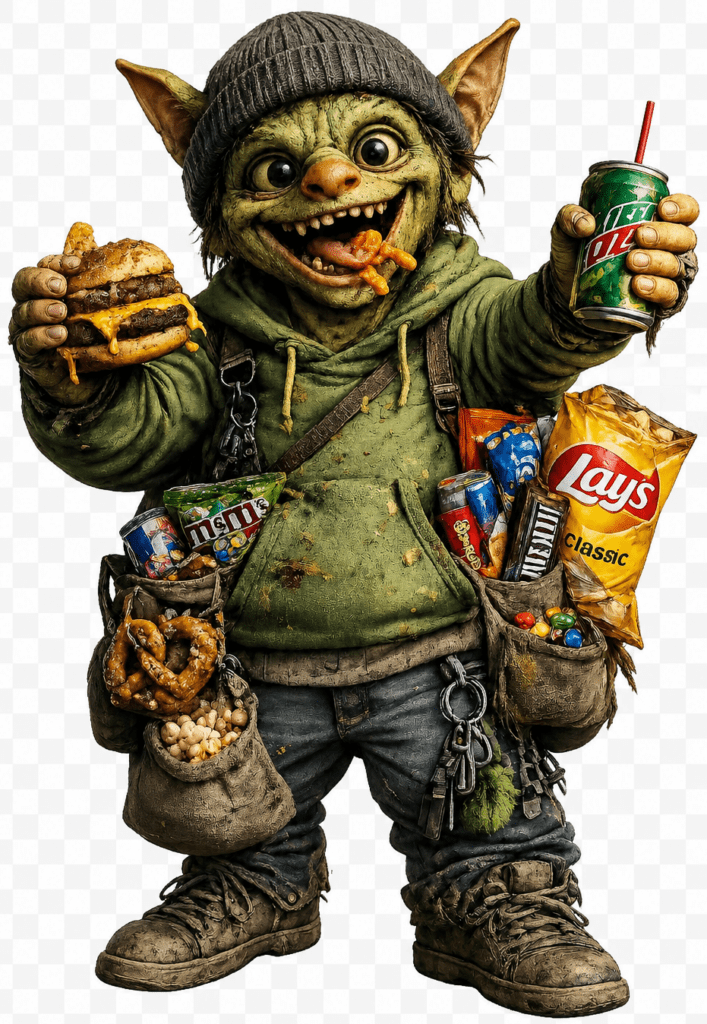
Goblinus gastronomicus
The largest goblin species by average body mass.
Snack Goblins are dedicated to food in all its forms. They are accomplished cooks, enthusiastic eaters, and relentless hunters of biscuits.
Traits include:
- Extraordinary sense of smell.
- Ability to locate snacks over remarkable distances.
- Ownership of emergency snacks.
- Ownership of backup emergency snacks.
Many historians believe civilisation itself was invented by Snack Goblins in an attempt to improve food storage.
5. The Chaos Goblin
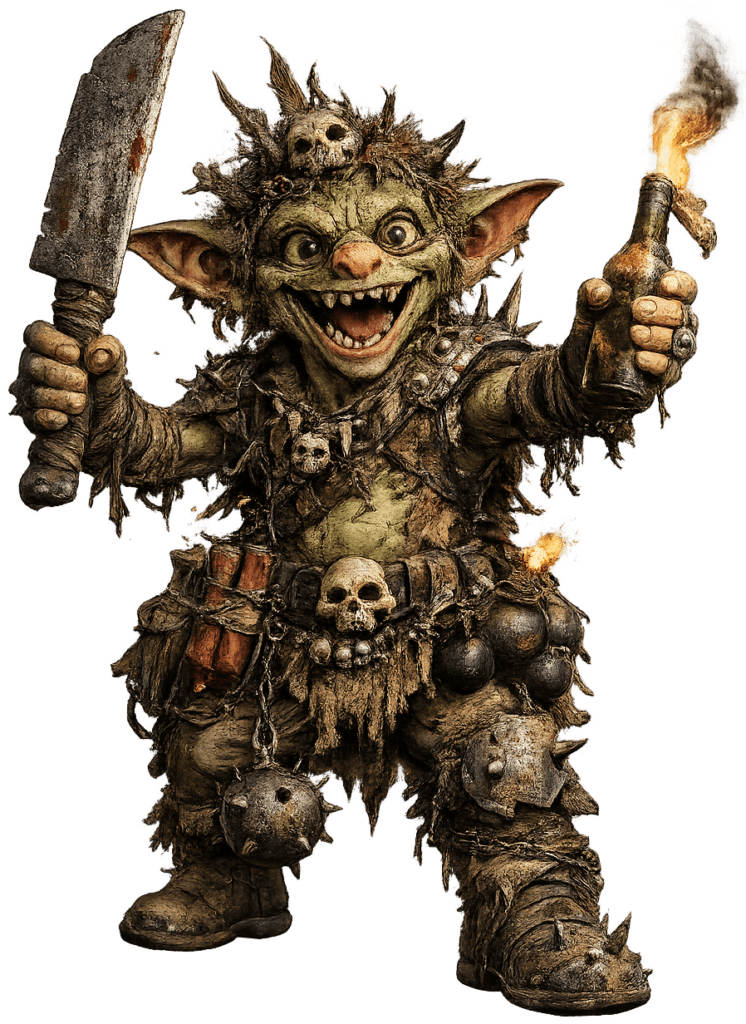
Goblinus improbabilis
The most unpredictable goblin species.
Chaos Goblins are responsible for a significant proportion of unusual events throughout recorded goblin history. They are not malicious, merely enthusiastic.
Traits include:
- Experimentation without planning.
- Creative interpretation of instructions.
- Unusual hobbies.
- Frequent appearances in accident reports.
Researchers have observed Chaos Goblins creating problems solely so they can enjoy solving them.
The Controversial French Subspecies
A small number of researchers recognise an additional subspecies:
Goblinus gastronomicus baguettensis
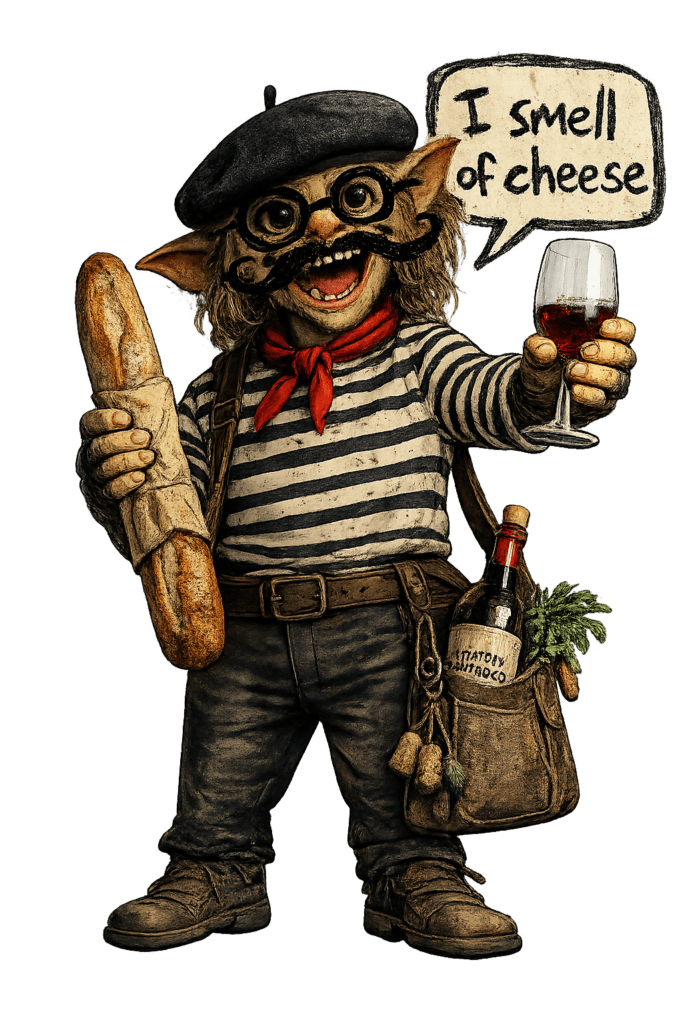
Commonly known as the French Snack Goblin.
This tiny population inhabits a small region of rural France and differs from ordinary Snack Goblins primarily through its devotion to bread, cheese, and lengthy discussions about bread and cheese.
The subspecies remains controversial.
Many goblin biologists refuse to recognise it.
Others insist it is worthy of further study.
The majority of the scientific community has concluded that because the population is French and occupies only a very small area, the matter can safely be ignored for the foreseeable future.
Final Thoughts
After billions of years of evolution, countless extinct lineages, several questionable decisions, and at least one period involving giant goblin dinosaurs, the modern goblins stand as one of evolution’s most remarkable achievements.
Whether collecting facts, inventing gadgets, consuming snacks, creating chaos, or simply wandering about asking difficult questions, modern goblins continue the proud traditions established by their ancient ancestors.
The evolutionary story of goblins may be complex.
Fortunately, Fact Goblin will continue researching it until somebody tells us to stop.
And even then, we will probably continue.
“From Bacterium to Bureaucrat: Four Billion Years of Goblin History”


Looking at the photos here, I am convinced my brother is probably a Snack Goblin. The only reason I’m not completely certain is that he’s not nearly as attractive.
If he eats lots of snacks, but isn’t handsome enough to be a goblin then have you considered he might be a gremlin? If so then seek help, as fast as you can!