
The Secret Lives of Traffic Cones: Guardians of Roadside Order
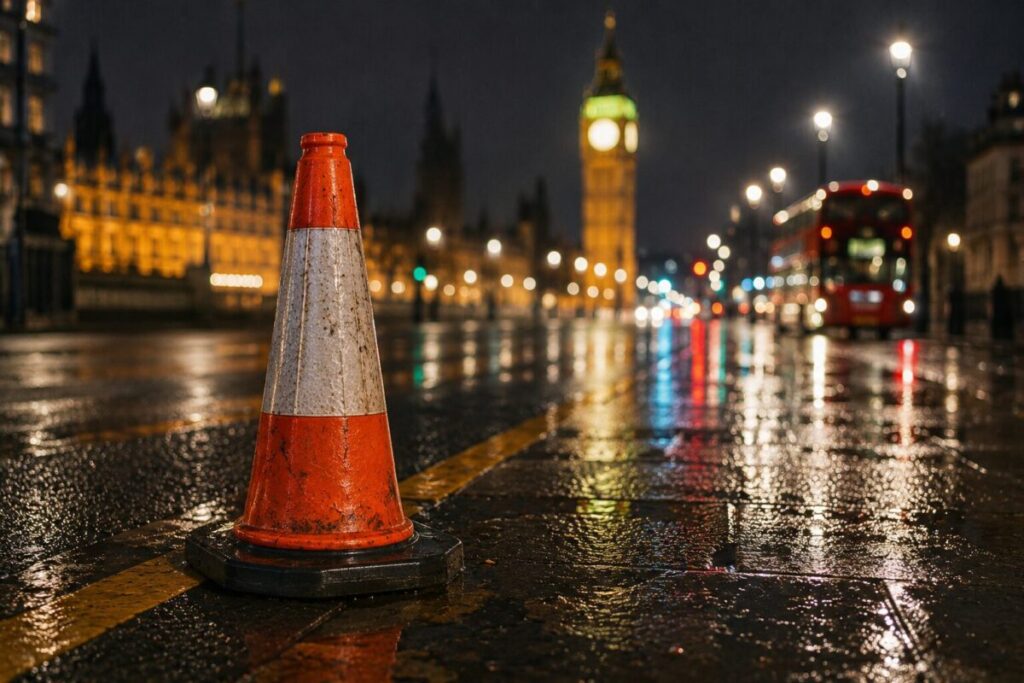
Traffic cones are described by officials as “road safety equipment,” which is exactly the sort of thing a traffic cone would want written on a form.
To most people, a cone is simply an orange plastic object placed near roadworks, potholes, wet paint, or one man in a hi-vis vest staring into a hole. But Fact Goblin researchers know better. The traffic cone is not merely equipment. It is a sentinel. A wanderer. A small orange authority figure with a rubber base and a private agenda.
By day, cones perform their public duties. They stand in lines. They guard trenches. They make cars move slightly to the left for no obvious reason. A cone can close an entire lane using nothing but posture, which is more power than most humans achieve in a lifetime.
Without cones, roadworks would just be “people near gravel.” The cone gives the whole scene meaning. It says, “Something official is happening here. Possibly repair. Possibly digging. Possibly a ritual involving asphalt.”
At night, however, cones become more mysterious.
This is when they gather in strange numbers. One cone left outside a shop can become twelve by morning. A cone beside a building site may later be discovered on top of a statue, a bus stop, or a student’s fridge. Nobody sees them travel, but everyone has seen the results.
Fact Goblin calls this process “borrowed momentum,” which is the scientific term for “someone carried it while laughing.”
There is also a clear cone hierarchy. Small cones are trainees, usually found in car parks and school playgrounds. Medium cones are experienced workers, trusted with pavements, potholes, and mild civic confusion. Large cones are senior officials, deployed for major diversions and serious holes. The old faded cones are elders. They are cracked, wise, and know which council vans contain biscuits.
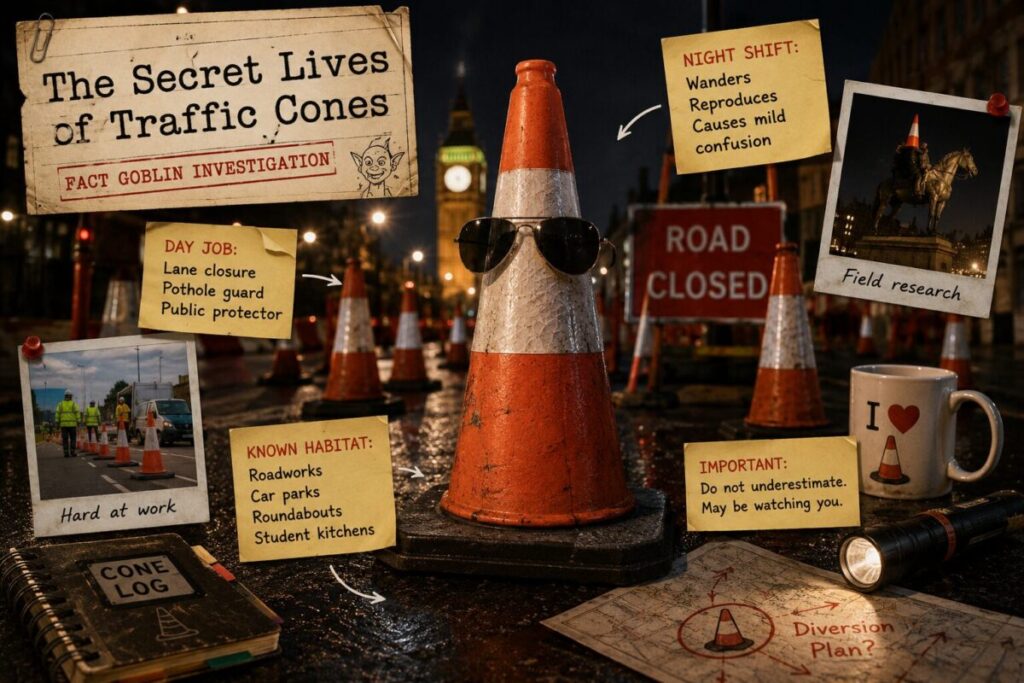
Their colour is important too. Scientists claim cones are orange so they are highly visible. This is partly true, but incomplete. Orange is the colour of confident obstruction. Red says danger. Yellow says caution. Orange says, “You could probably go this way, but I have decided you won’t.”
So next time you see a traffic cone, do not dismiss it as a lump of plastic. It may be guarding a trench. It may be supervising roadworks. It may be waiting for nightfall.
Most importantly, it may be watching you.
Every unexplained diversion begins with one cone who had a plan.
