
Muppets meet goblins
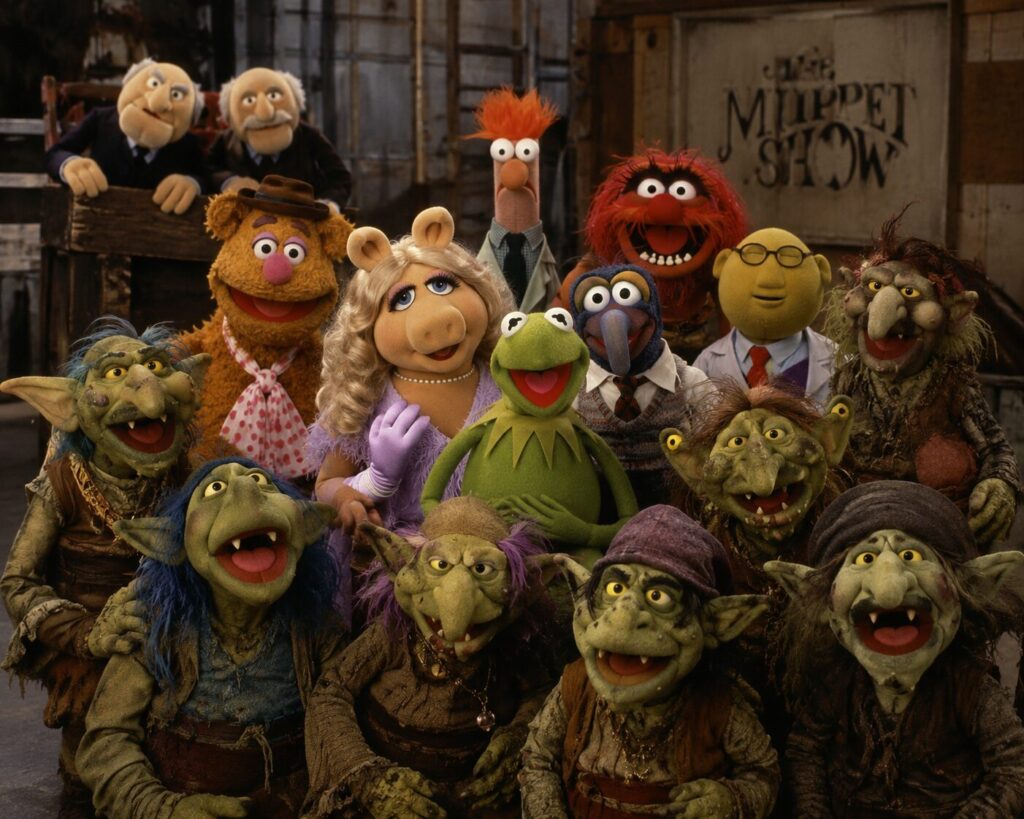
For the official Fact Goblin historical record, the arrival of goblins in puppetry is generally traced to the celebrated but largely forgotten Goblin Felt Initiative of 1954.
According to archived Fact Goblin documents, several goblins employed by the Department of Public Fact Distribution became concerned that television audiences were receiving insufficient quantities of educational goblin content. A committee chaired by Professor Snorkle B. Thimblegrub concluded that the most efficient way to introduce goblins to family entertainment was to disguise them as puppets.
The first experimental “goblin muppets” were reportedly constructed in a converted garden shed in Hertfordshire using felt, old waistcoats, and a surprisingly large quantity of teacup saucers. Early prototypes suffered from a number of technical issues, including attempting to negotiate higher salaries than their operators and repeatedly wandering off in search of biscuits during filming.
By the early 1960s, the programme had become a quiet success. Viewers reportedly found it impossible to distinguish between conventional puppets and goblins pretending to be puppets. Internal Fact Goblin correspondence from 1964 notes:
“The public appears entirely comfortable with the arrangement and have accepted the goblin performers without question. Several have even become fan favourites.”
Although our researchers have yet to discover any video footage of our “Muppet” goblins, they were able to find some audio from a show in the late 1980’s.
Among the most famous goblin performers were:
- Boggle Feltsnout – renowned for accidentally eating portions of the scenery.
- Murgle Threadwhistle – the first goblin to receive a Golden Thimble Award for Excellence in Puppetry.
- Nibwick Plushgrub – famous for remaining motionless on a shelf for three consecutive months in order to maintain the illusion.
The arrangement continued for decades until a contractual dispute involving thirteen crates of custard creams and an ornamental accordion led most goblin performers to retire from television.
Today, historians generally agree that the goblin contribution to classic puppetry was substantial, although the exact number of goblins involved remains uncertain. Estimates range from twelve to “quite a lot,” which remains the officially accepted figure in the Fact Goblin archives.

I believe that Gonzo is secretly a goblin!