
Goblin Evolution IV: When Neanderthal Goblins Met Modern Goblins: An Uneasy Coexistence
By Professor Snorkle B. Thimblegrub, F.G.S., M.B.E., O.B.E., D.Phil., B.Sc. (Unverified)
Modern goblins often imagine that their ancestors lived simple lives. They picture small tribes, peaceful caves, and the occasional woolly mammoth hunt.
The archaeological evidence suggests the reality was considerably stranger.
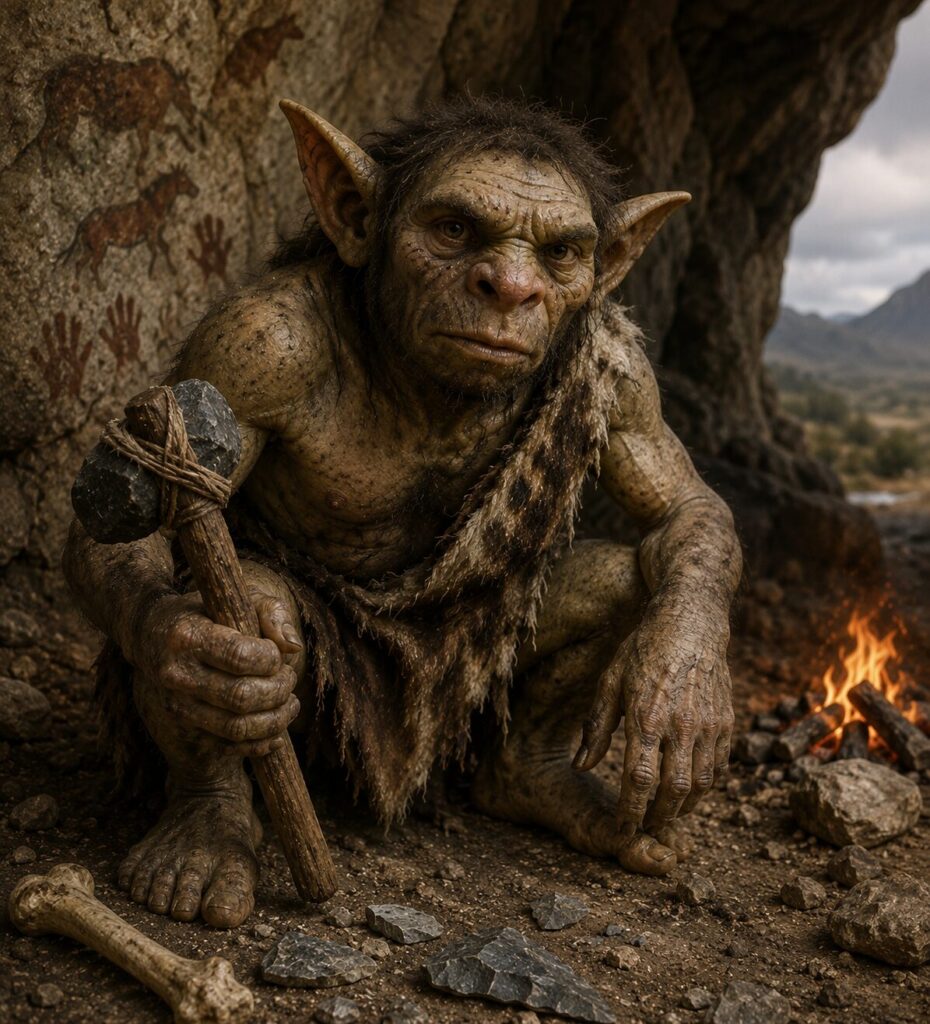
For thousands of years, Neanderthal Goblins (Goblinus neanderthalensis) and Early Modern Goblins (Goblinus modernus.) shared the same valleys, forests, and cave systems. Fossils, cave paintings, and an alarming number of strongly worded stone tablets indicate that the two groups frequently interacted, traded, argued, and occasionally attempted to hit each other with sticks.
The Neanderthal Goblins were physically impressive creatures. Broad-shouldered and immensely strong, they were expert hunters who specialised in bringing down woolly mammoths, giant elk, cave bears, and the fearsome Greater Hairy Turnip Beast, a creature that was approximately ninety percent fur and ten percent bad attitude.
Modern Goblins, meanwhile, were smaller and physically weaker. Instead of relying on strength, they preferred planning, organisation, and inventing systems. Within weeks of arriving in a cave, Modern Goblins would establish committees, assign cave numbers, and introduce a schedule for collecting firewood.
The two societies approached hunting very differently.
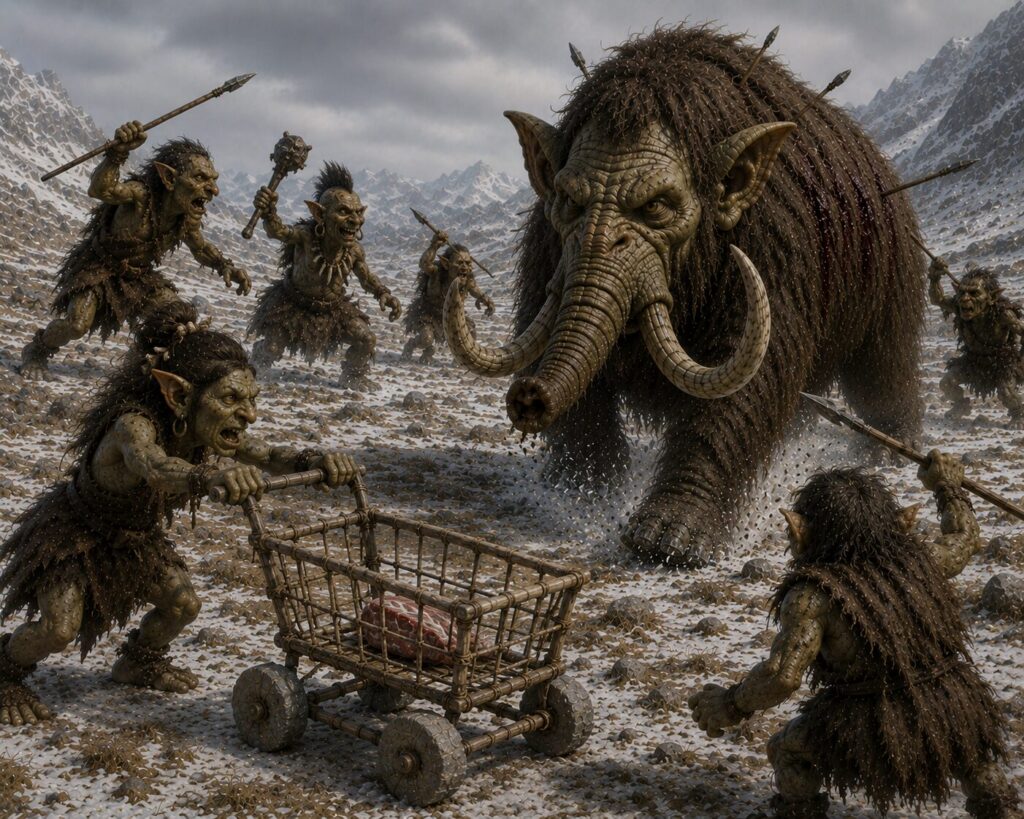
When hunting a woolly mammoth, Neanderthal Goblins would gather twenty hunters, sharpen their spears, and charge directly at the animal while yelling.
Modern Goblins preferred a more organised approach. They would spend three weeks drawing diagrams, holding meetings, arguing about mammoth migration patterns, and creating a colour-coded mammoth management strategy. By the time the plan was finished, the mammoth had usually wandered elsewhere.
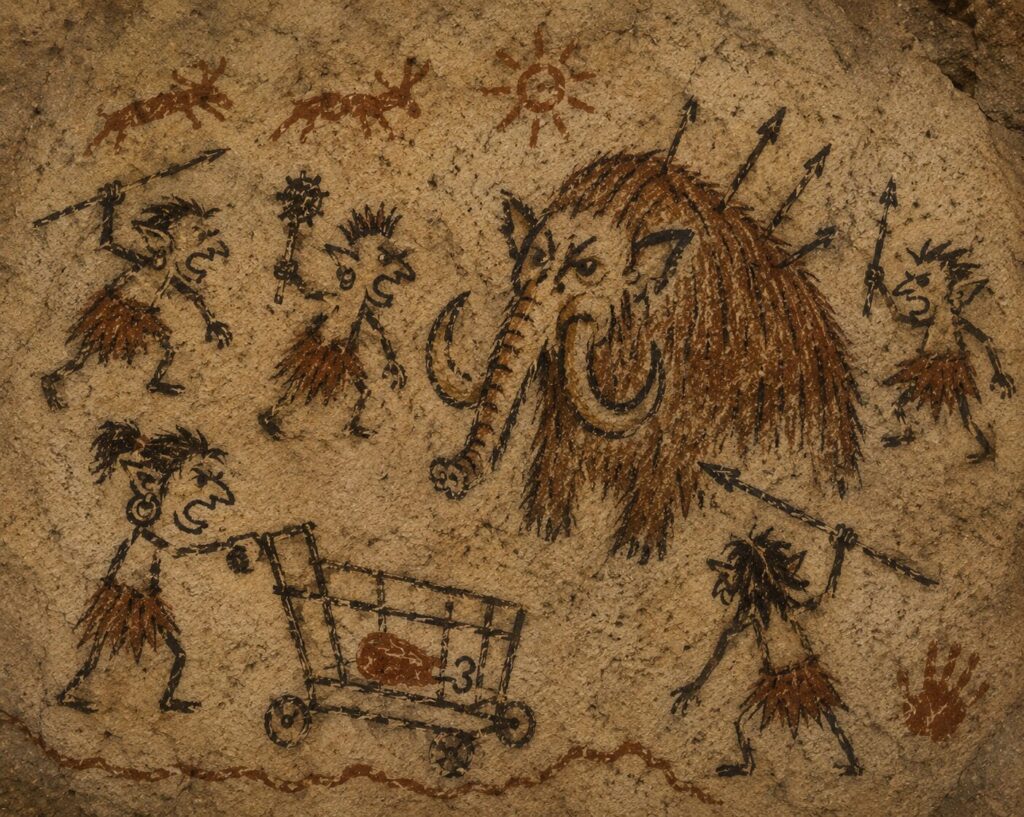
As a result, mixed hunting parties became common. The Neanderthal Goblins would perform the hunting. The Modern Goblins would later explain how it could have been done more efficiently. This arrangement appears to have annoyed everyone equally.
In addition to mammoths, goblin hunters pursued many other now-extinct animals, including:
- The Six-Horned Woolly Sausage Deer, prized for its enormous antlers and surprisingly convenient flavour.
- The Dire Potato Buffalo, a giant shaggy herbivore that could feed an entire cave for weeks.
- The Thunder Goose, a three-metre-tall bird capable of breaking a goblin’s arm simply by looking annoyed.
- The Lesser Cave Cabbage, technically a plant, but considered dangerous enough to justify hunting parties.
- The Megaferret of Doom, which despite its name was mostly just an unusually large ferret.
Life inside the caves reflected the differences between the two cultures. Neanderthal Goblin caves were practical. They contained sleeping areas, food stores, tools, and paintings of successful hunts. Modern Goblin caves quickly became cluttered with signs, records, maps, notices, complaints, and complaints about the notices.
One famous cave complex in southern France contains over three hundred clay tablets documenting a dispute over whose turn it was to clean the mammoth-bone storage area. The dispute lasted eighty-seven years. Neither side won.
Trade flourished between the groups. Neanderthal Goblins exchanged meat, hides, and tools in return for maps, stories, shiny objects, and complicated advice that nobody had requested.
For several thousand years the two peoples lived side by side.
Eventually, however, the Neanderthal Goblins disappeared from the goblopological record. Whether they gradually merged with the Modern Goblin population or wandered off in search of the legendary Eternal Mammoth remains unknown.
