
By Morkle Muckleaf, Chief Editor and Amateur Dinosaur Enthusiast
In a previous article, we explored how the earliest goblin-like organisms evolved from microscopic bacteria into strange fish-like creatures that eventually crawled from the oceans onto the land. What happened next is one of the most remarkable chapters in goblin history.
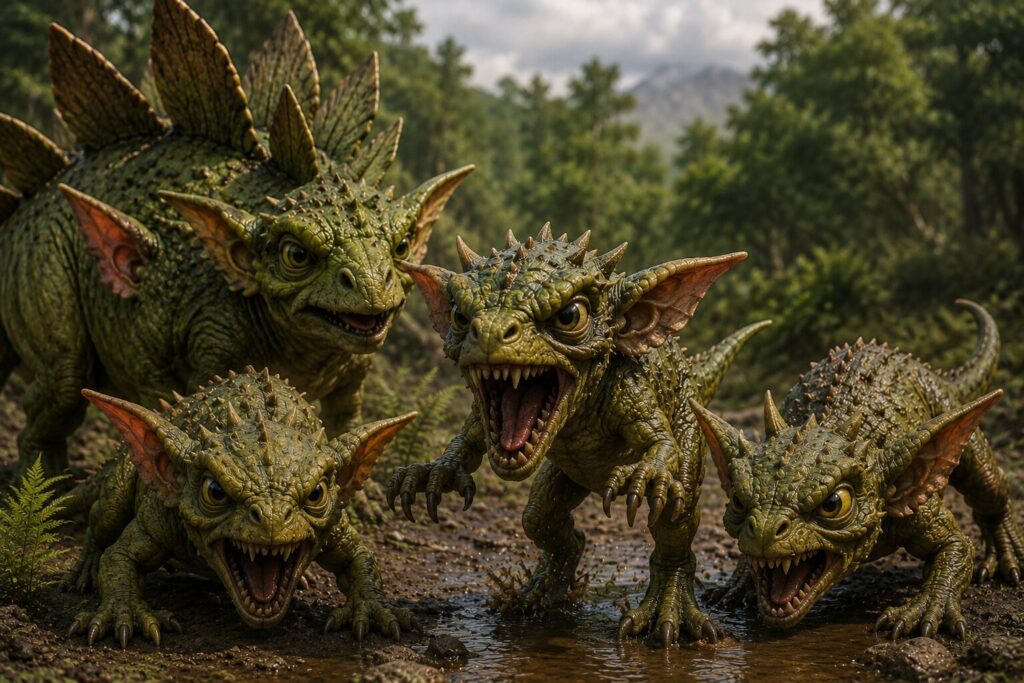
The first land-dwelling goblin ancestor, Littoragoblinus exasperatus, was a curious creature. Part fish, part goblin, and entirely unhappy, it spent much of its time dragging itself through muddy coastal swamps while searching for food and avoiding conversations with fish. Although clumsy, it possessed one key advantage: it could survive on land.
Over millions of years these shoreline pioneers diversified into a wide range of species. Some became larger. Others became faster. Many developed stronger limbs and improved lungs. Fossils discovered by Fact Goblin researchers reveal a succession of increasingly goblin-like reptiles collectively known as the Goblo Saurians. These creatures retained the distinctive goblin ears of their ancestors while acquiring scales, powerful tails, and an alarming number of teeth.
By the late Triassic Period, approximately 220 million years ago, goblin-reptiles had become widespread across much of the world. Some remained small insect hunters, while others evolved into formidable predators. Species such as Goblinosaurus minor hunted in packs, while the gigantic Tyrannogoblinus magnificus could reportedly consume an entire cartload of prehistoric sandwiches in a single sitting.
Not all goblin descendants followed this path, however.
At some point during this great reptilian expansion, one branch of the family tree split away from the future goblin dinosaurs. These smaller, more adaptable creatures gradually followed a very different evolutionary route. Rather than becoming larger and more dinosaur-like, they developed traits that would eventually lead to modern goblins.
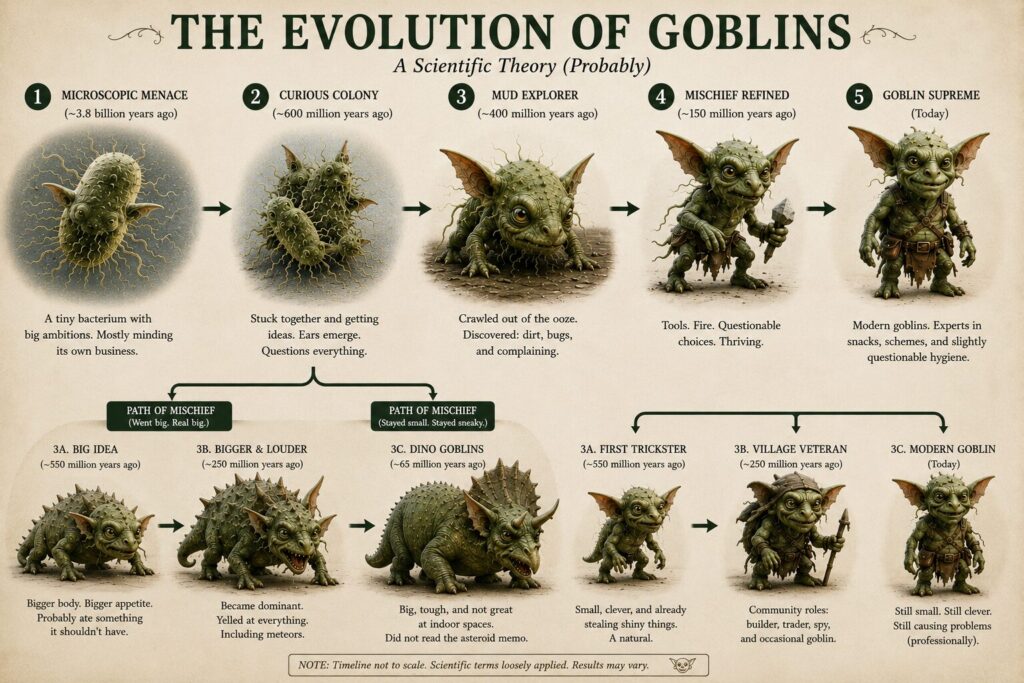
Exactly when this split occurred remains a matter of fierce debate among goblin palaeontologists. Some place it during the late Triassic. Others argue it occurred much earlier. One researcher insists the split happened because one group preferred mud while the other preferred paperwork. Further research is ongoing.
For the purposes of this article, we shall leave that mysterious branch behind and continue following the dinosaur line.
During the Jurassic and Cretaceous periods, goblin dinosaurs flourished. They occupied forests, plains, deserts, and swamps. Fossils suggest some species developed brightly coloured scales, elaborate crests, and impressive displays used for attracting mates or intimidating rival goblins. Several species also appear to have invented the concept of standing around discussing whether they were standing in the best location.
The largest known species, T. magnificus, stood over six metres tall and possessed a skull nearly one metre long. Despite its fearsome appearance, fossil evidence suggests it spent much of its time investigating unusual noises and becoming distracted by interesting rocks.
For over 150 million years the goblin dinosaurs dominated their ecosystems. Then, approximately 66 million years ago, disaster struck.
There is much speculation as to what caused the demise of the goblin dinosaurs. What is known is that the impact of the famous asteroid that caused the Chicxulub crater, and is blamed possibly unfairly for wiping out the non-goblin dinosaurs, wasn’t to blame. This is because the goblin dinosaurs finally went extinct the Tuesday before that happened (though it wasn’t known as a Tuesday at the time).
Although there is much speculation, and sometimes violent argument, on what caused their demise, the two most accepted theories postulates that it was either:
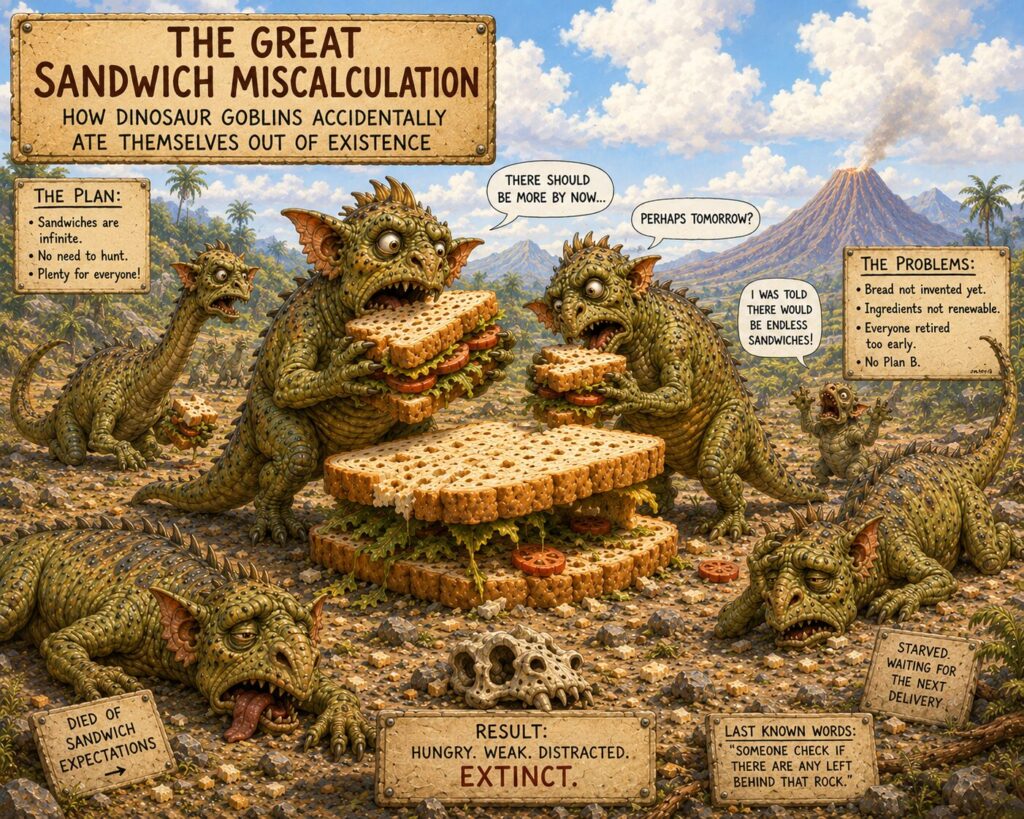
The Great Sandwich Miscalculation
Some palaeontologists believe dinosaur goblins became so successful that they stopped hunting and instead attempted to live entirely on giant prehistoric sandwiches. Unfortunately, only a few dinosaurs, largely due to their short arms, ever learned how to make sandwiches. This small group had, unfortunately, gathered together for their annual sandwich expo when they were hit by, ironically, a small asteroid (the third cousin of the famous one). Entire populations then spent years waiting for someone else to bring lunch. Some scientists there argue that, under this theory, an asteroid did indeed result in their extinction.
The Wheel of Questionable Decisions
A recently discovered cave mural appears to show dinosaur goblins attaching wheels to absolutely everything, including nests, trees, and one another. This period, known as the Rolling Age, reportedly ended badly.
Or did they actually go extinct?
A handful of controversial fossils discovered in remote locations suggest that isolated populations may have persisted far longer than previously believed. While mainstream palaeontology remains sceptical, Fact Goblin researchers continue to investigate reports of unusually goblin-like dinosaur footprints, mysterious eggs, and several highly suspicious chickens.
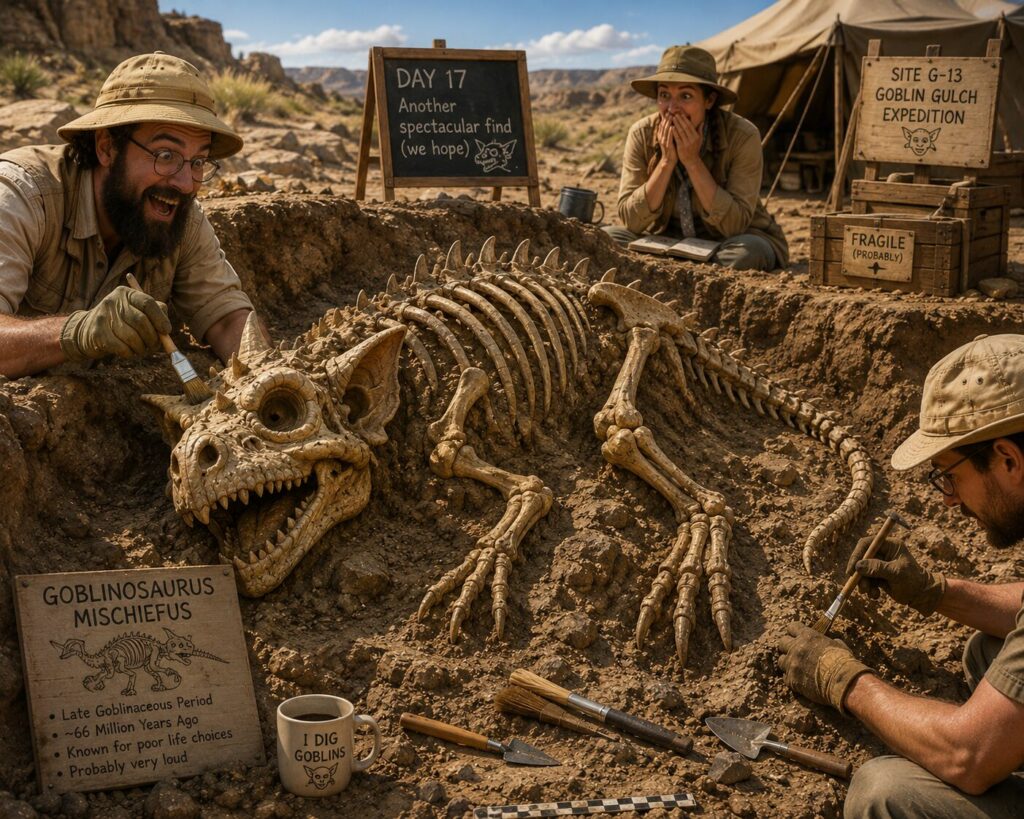
The Chicken Problem
A minority of researchers believe dinosaur goblins did not actually go extinct. Instead, they gradually evolved into modern chickens. This theory remains controversial because chickens become extremely defensive whenever it is mentioned.
In our next article, we shall return to the branch that left the dinosaur line behind and explore how those early proto-goblins eventually evolved into the modern Fact Goblin, master of facts, collector of trivia, and occasional owner of an excessive number of notebooks.
